Perth Zoo has welcomed two dingo pups into their care, Sunny and Luna, who are, as you would expect, absolutely adorable. West Australians are itching to meet these little pups, to see them bounce around their enclosure as they happily run, roll and jump.
About Perth Zoo’s dingo pups
Perth Zoo’s new dingo pups are Sunny and Luna. They’re three months old, as of early August. Most dingoes have white socks: Sunny is male and can be identified by his shorter “socks”. Luna is female and can be identified by her longer “socks”.
As siblings, they’re not a breeding pair but will be happy companions at Perth Zoo, just like Mirri and Daku, who came to Perth Zoo as pups in 2011, and crossed the rainbow bridge in 2023 and 2025.
Want to meet the new dingo pups at Perth Zoo?
Sunny and Luna aren’t ready to meet the public yet — currently, the keepers at Perth Zoo are “integrating them into all the new sights and smells, while also developing strong, trusting relationships”. Perth Zoo says they’re working on “animal time”, making sure their new dingo pups are ready before moving into the Australian Bushwalk habitat.
Coming from Victoria, it’s likely Sunny and Luna were bred specifically for Perth Zoo by the Dingo Discovery Sanctuary and Research Centre, which is run by the Australian Dingo Foundation. If you’re lucky enough to be in Victoria, be sure to visit Dingo Discovery to learn more about dingoes. You can also support the sanctuary by donating online.
Dingo pups in Ballina, NSW
Dingoes and dingo pups are essential in our zoos and wildlife sanctuaries — they are ambassadors for this incredible native species. When you see dingoes at your local zoo, marvel at how incredible they are, but also consider that the reality for our wild dingoes is much darker.
Just as Perth Zoo announced the arrival of their new dingo pups, a different reality played out in NSW.
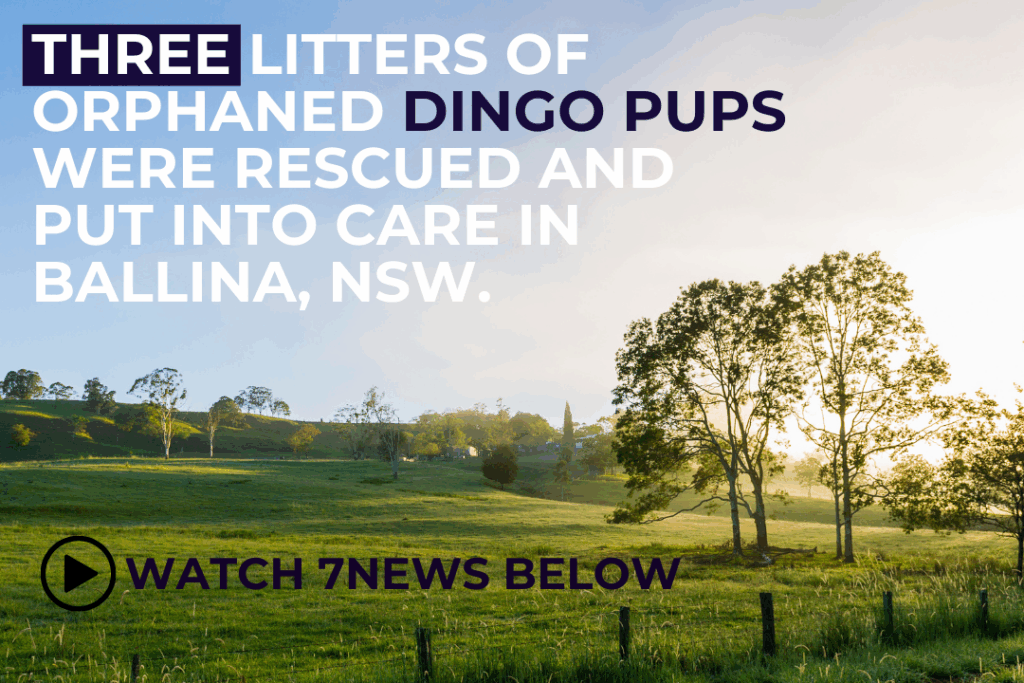
Eleven dingo pups were surrendered to Highlands Dingo Rescue.
Three separate litters. In each case, their mother was shot.
In one case, the dingo pups’ mother was shot by a dairy farmer, who surrendered the pups to a wildlife rescue. In another case, the pups’ mother was shot by a farmer who threatened to drown the dingo pups.
When rescued, ten dingo pups were only a few weeks old and another was eight days old. The youngest, Bunji, weighed only 400grams and needed 3-hourly feeds.
These are not isolated incidents. Over the years, Highlands Dingo Rescue has rehabilitated over 76 wild-born dingo pups. This doesn’t include the number of adult dingoes who have been in their care over the years.
Around Australia, dingo and wildlife rescues are in the same boat.
What’s the reality faced by wild dingoes in Australia?
Dingoes are recognised as native Australian animals but are not protected as native fauna in the same way as koalas, wombats or other native wildlife. Dingoes in zoos such as the new dingo pups at Perth Zoo are more fortunate than our wild dingoes.
Wild dingoes are targeted and killed throughout many parts of Australia.
It is legal to poison, trap and shoot dingoes in many parts of Australia.
1080 poison is used widely in Australia to kill animals including dingoes. 1080 causes fatal and inhumane suffering in every animal who consumes it, including domestic pets.
When adult dingoes are killed, their pups meet the same fate, or are left to die or are surrendered to a wildlife rescue. At times, pups are given away without sufficient screening, which can result in dingo pups being dumped or surrendered.
Although dingo pups are irresistibly cute, their treatment as a native animal is far from it.

Can dingo pups be released back into the wild?
No — releasing a dingo into the wild is prohibited.
Releasing a dingo back into the wild is only legal in specific circumstances and with a permit.
This means that dingo and wildlife rescues are inundated with dingoes and dingo pups who need rehabilitation and rehoming into domestic environments. These rescues are not-for-profit organisations which are often at capacity.
Finding homes for rescue dingoes is challenging: dingoes are not dogs — prospective families must meet very specific requirements and be willing to commit for 10-20 years. In addition, it’s not legal to adopt dingoes in every state of Australia. Some dingoes remain in care for several years before finding a home.
Why is Australia failing to protect dingoes?
Australia has competing interests when it comes to dingoes.
On the one hand, dingoes are admired as a native animal: dingoes are featured in our native animal exhibits in zoos and wildlife parks and they’re emblazoned across t-shirts, tea towels, keyrings and other tourist merchandise. Dingoes hold deep, cultural significance for our First Nations people.
On the other hand, dingoes are blamed for stock losses, that is, the killing of sheep and other livestock. Lost livestock can have economic, emotional and psychological impacts on pastoralists, their families and their communities.
Not all pastoralists support the killing of dingoes, with some pastoralists open to alternative control methods. Leaders in the field recognise the important role that dingoes play in our environment, such as their ability to help manage grazing pressure.
Dingo conservation and management is a complex issue which you can read about here: “‘The boss of Country’, not wild dogs to kill: living with dingoes can unite communities”, by Professor Euan Ritchie, Dr Bradley Smith, Dr Kylie Cairns, Sonya Takau and Whitney Rassip.
You can also listen to or read this interview with Dr Euan Ritchie, where he dives into a discussion about the issues of dingo conservation and management.

Don’t we have laws which protect dingoes in Australia?
In most places, no. It’s actually the opposite, with few exceptions.
Dingoes are protected on K’gari (previously known as Fraser Island) but in most parts of Australia, our laws do not protect dingoes.
It is legal to shoot, trap or poison dingoes in most parts of Australia, and the legislation goes as far as requiring landholders to take action if dingoes are found on their property, even if they do not support the killing of dingoes.
For example, in Western Australia:
- Dingoes are recognised as native but not protected under the Biodiversity Conservation Act 2016.
- There are no penalties for taking, keeping, disturbing or controlling dingoes in WA due to an exemption to the Biodiversity Conservation Act.
- Dingoes are treated as wild dogs in Western Australia: “Wild dogs are declared pests for the whole of Western Australia under Section 22 of the Biosecurity and Agriculture Act 2007”.
- Because dingoes are declared as “pests”, dingoes can be controlled (i.e. killed) “in and near livestock grazing areas”. Methods can include:
- ground and aerial baiting with meat poisoned with 1080 (sodium fluoroacetate)
- canid pest ejectors
- trapping using strychnine
- fencing
- trapping and shooting
- non lethal deterrents including squawker and howler boxes, and livestock guardian dogs.
- Because dingoes are declared as pests in WA, landowners or occupiers of land are legally required to control dingoes on their land — failure to do so can result in a $20,000 fine (Biosecurity and Agriculture Management Act 2007, section 30). What does this mean? It means that even if a landowner wants to protect dingoes, the legislation makes it difficult for them to do so.
- There is no state-wide bounty system in WA but some local shires have bounty systems in place such as the Shire of Yalgoo and the Shire of Murchison, where individuals can exchange dingo scalps for $100 each.

What you can do to protect dingoes and dingo pups in Australia
Support dingo rescues and advocacy organisations by following them on social media, sharing their posts and donating funds. Dingo and wildlife rescues are not-for-profit organisations which rely on donations to rehabilitate, maintain and rehome their dingoes. Every dingo which comes into care requires vet checks, immunisations, food, shelter and often, medical treatment.
Support research into dingo conservation and management by donating to the Australian Dingo Foundation and supporting new dingo research.
Sign petitions to protect dingoes, such as:
- Ban 1080 poison (Coalition Against 1080 Poison)
- Stop the Bounty (Wooleen Station)
- Protect dingoes in Victoria (Defend the Wild) (Warning, this page includes confronting images).


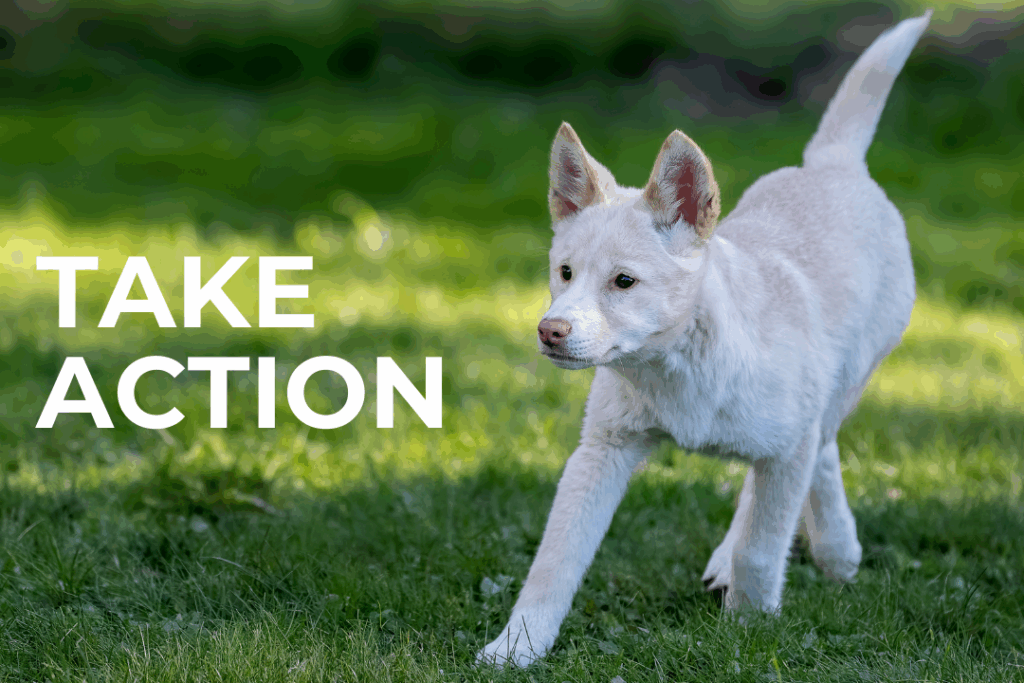
Adopt a dingo — If you live in NSW, ACT, VIC, WA or the NT, consider adopting a dingo. Click here for a list of dingo rescues.
Visit dingoes and dingoes pups at zoos and wildlife sanctuaries such as Perth Zoo. Also consider a dingo encounter at Wooleen Station in Western Australia, or the Dingo Discovery Sanctuary and Research Centre in Victoria.
Book a dingo show or school incursion with a wildlife presenter in your state/territory, such as The Wildlife Twins (Ballina, NSW).
If you are a landholder affected by dingoes:
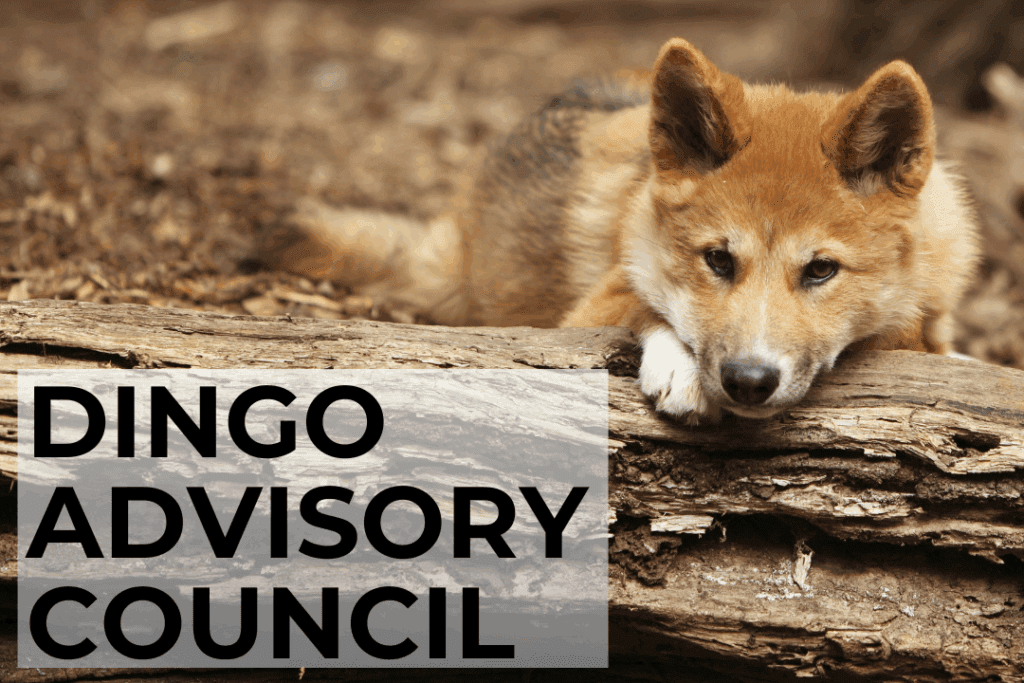
- seek support from the Dingo Advisory Council.
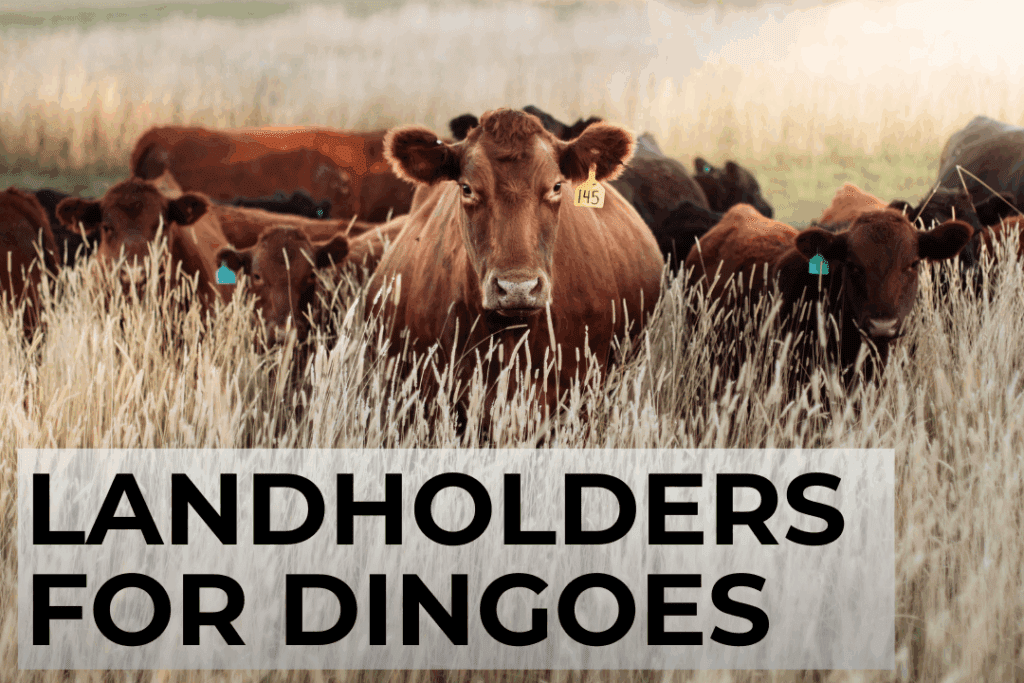
- view resources available at Landholders for Dingoes and the Dingo 2030 Network.
Engage in conversations about dingoes, online and offline. Be kind, draw on the research and keep an open mind: remember that dingo conservation and management is not black and white. When you visit dingoes around Australia or the dingo pups at Perth Zoo, engage in meaningful conversations with your friends and family, even if it’s as simple as saying “dingoes aren’t protected in most parts of Australia”.
Lastly, write an email to your government representatives, such as local council or shire members, state and federal Members of Parliament and relevant government ministers. Ask them what they’re doing to protect this native species. If they support the killing of dingoes, ask them if there is a better way — if they don’t have an answer, ask them to contact the Dingo Advisory Council.
NOTE: This article is general in nature and is for information purposes only. It is not a substitute for specific qualified advice that considers your specific circumstances.
0 Comments